Shooting in Manual Does Not Make You a Better Photographer

Shooting in Manual Does Not Make You a Better Photographer

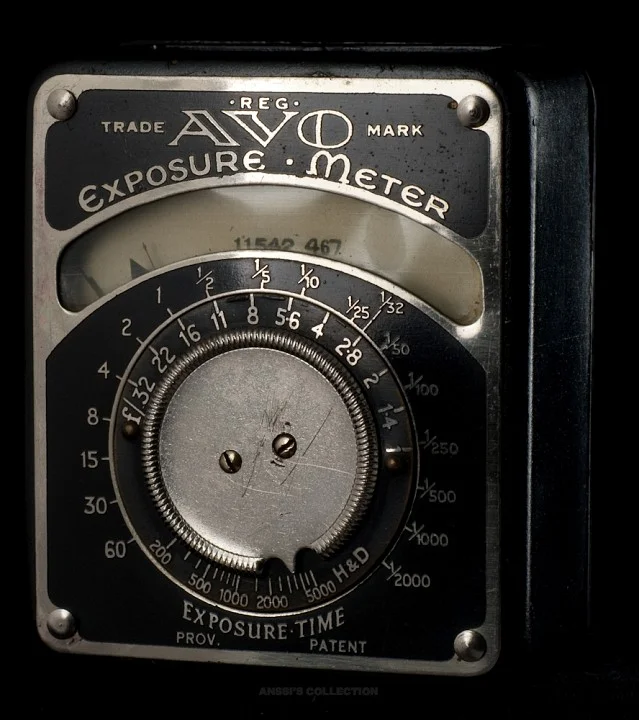
Fair warning.  This is a rant.  A rant against stupidity being perpetrated against photographers everywhere.  Sadly, because so many creatives actually believe this load of fertilizer to be true, they become frustrated, discouraged and otherwise disconnected because of the volume of images that get made that aren't any good.

Read More

My Day With Peter Hurley

My Day With Peter Hurley

On March 24th, 2016 I got to spend the day with Peter Hurley.  Thousands of people have done so in classes and workshops, and I count myself as fortunate for having done so, but yesterday was different and special.  Peter was in Toronto to deliver his Illuminating the Face workshop presented by Henry's Learning Labs, and I had the honour and pleasure to both introduce Peter to the attendees and to help with the setup and assist him over the course of the day.  It was really quite amazing.

Read More

Portrait Perfect with Lindsay Adler - A Review

Portrait Perfect with Lindsay Adler  - A Review

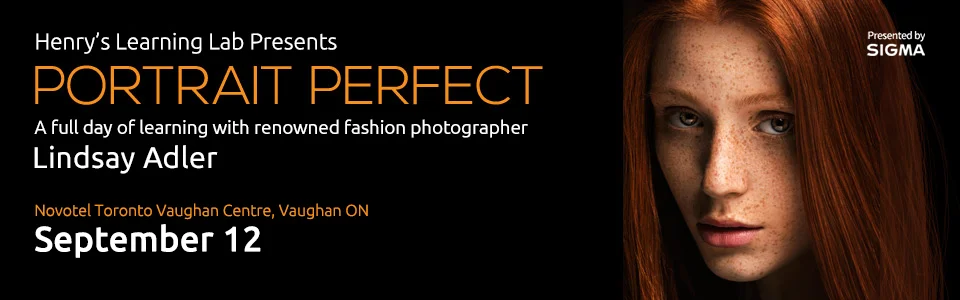
I spent today, September 12th with a group of interested photographers including my friends Isabel, Laurie and Joseph.  We had all signed up independently for the Portrait Perfect session put on by Henry's Learning Lab featuring renowned New York City based fashion photographer Lindsay Adler.  It was a most informative and interesting day.

Read More

Get a Head Start When It Comes to Shooting Portraits

Get a Head Start When It Comes to Shooting Portraits

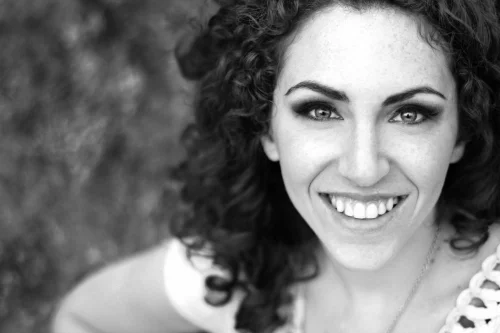
For many photographers, shooting people is where it's at, or at least where we'd like to be.  Even if we prefer nature, or landscapes or wildlife, we all need to be able to make great portraits of people, even if only our friends and family.  After all, we do have a really good camera, right?

Read More

You Need This Book in your Photographic Library

You Need This Book in your Photographic Library

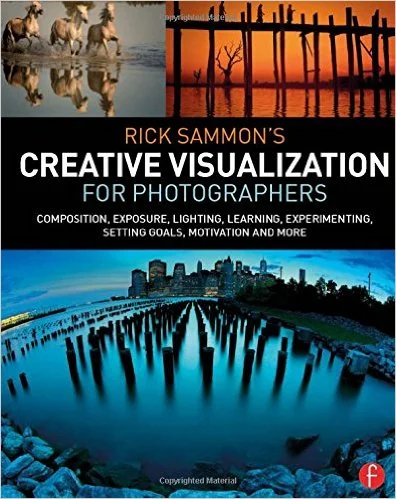
Folks who know me, know that I support my friends.  They also know that I don't "spin" stories to suit a desired outcome.  Those things clear, I am writing this post to tell you that you WANT and NEED to get my friend Rick Sammon's book called Creative Visualization for Photographers.

Read More

TUTORIAL : Merging Catalogs in Lightroom - From Laptop to Desktop

TUTORIAL : Merging Catalogs in Lightroom - From Laptop to Desktop

More and more, I encounter photographers who want to work while mobile, before they get a chance to get back to the "main" computer and import the images into Lightroom.  They want to upload to a laptop daily, do some edits, may be even post some work, but not have to duplicate everything when they get back home nor have multiple catalogs and try to remember where everything is and which version is current.

Read More

VIDEO : Options in Choosing a Zoom Lens

VIDEO : Options in Choosing a Zoom Lens

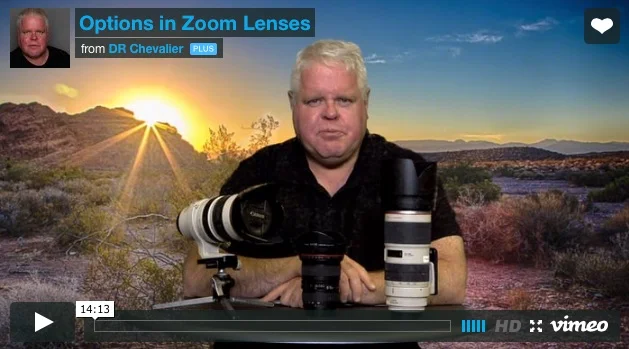
There are lots of choices in zoom lenses.  There is also a lot of misinformation and confusion that makes a purchase decision more difficult.  In this video, I try to make things simpler by touching on the points that will matter and breaking zoom lens selection into three major categories, the all-around zoom, the wide angle zoom and the telephoto zoom.  Enjoy!

Read More

2015 : 10 Ideas to Improve Your Photography

nov_13_2014_09.jpg

As artists, we all want to improve our skills, to improve our abilities with our craft, and to grow as artists.  For your thoughts and perhaps inspiration, I offer the following 10 Ideas to Improve Your Photography in 2015. 1.  Don't trap yourself in filler projects.  A 365 sounds like a good idea until you get tired of it.  Same thing happens with a forced deliverable such as shoot everything with the 50mm.  Forcing your creativity into a box never spawns more real creativity.

2.  Find and tell your own stories.  Repetition may be the mother of skill, but if all you do is replicate someone else's hard work, you cheat yourself of your own innovation and interesting ideas.

3.  Post only your best work.  There's no award for volume, so set your own bar very high.  If you like it, it's worth posting.

4.  Get out of your own comfort zone.  Shoot something you would never normally do.  If you mostly do still life, go shoot sports.  If you shoot only action, shoot a still life.  The steps you go through to master the uncomfortable will make you better at the things that you like.

5.  Assign yourself projects.  Certainly clubs, communities and myriad groups can keep you busy with topic of the day, or the week or the month challenges, but they aren't your projects.  You are building them for someone else.  Build for yourself.  A project can be simple such as shoot to get 10 keepers with a 24mm focal length, all at different lens openings.

6.  Take a notebook with you when you photograph.  Write down jot notes about what you were thinking when you made the photograph.  Don't worry about recording settings, they are in the EXIF data and in the long term won't matter much anyway.  Record your mental perspective or the feeling you had.

7.  Take an image you really like and produce 5 completely different interpretations of it using your digital darkroom to tell 5 different stories with the same core image.

8.  Using only a flexible desk lamp, experiment with different lighting positions on the same subject, using light and shadow to tell different stories and to set different moods.

9.  Carry a camera everywhere you go for one week, shooting anything that you see that is interesting to you.  If something catches your eye, shoot it, and try to use a focal length that mimics your eye, something in the 35mm to 50mm effective focal length range.

10.  Shoot video clips.  Don't worry about the audio.  Shooting motion will give you a greater appreciation of the power of a great still.  Make a hybrid project containing your clips, some stills and overlay some music.  Your computer likely came with all the software you could need to do this.

Above all else, have fun, and make photos.

Perspectives on Photoshop World 2014 Las Vegas

pswpp_w699_h367.jpg

So straight up, I am a huge believer in the work that the people at KelbyOne do when it comes to photographic and related software training.  They have been in my personal experience, unfailingly supportive, friendly and consistently deliver great content.  I just returned this morning on the red-eye from Las Vegas and wanted to get my thoughts down before I fell asleep (again). I flew in a bit early because there is a lot of interesting stuff to shoot in the Las Vegas area, especially if you are willing to get off the strip.  In truth, I shot nothing on the Strip at all, it's not really my scene.  I did do a helicopter trip to the Grand Canyon, went to the Valley of Fire for sunrise, went to the Neon Sign Graveyard and also did a Pre-Con workshop with the inestimable #JoeMcNally.  The Pre-Con is an add-on package to Photoshop World and if there is one you want to do are well worth the time and money.  My friends Isabel and Stephanie did a Pre-Con on light painting with Dave Black and said it was really good.

For those who've never been, Photoshop World #PSW14 is the firehose of training.  You choose your tracks, your instructors, your classes.  Show up awake, and prepare to drown in knowledge transfer.

This year, I want to thank Glyn Dewis, Jim DiVitale, Joe Glyda, Raphael "RC" Concepcion, Roberto Valenzuela, David Ziser, Dave Cuerdon, Jason Groupp, Dave Black, Moose Petersen, Julianne Kost, and of course, Sergeant Major Joe McNally (rank earned while he was "encouraging" us during his workshop) for delivering superb content in a friendly and powerful manner.   I'd like to thank Bill Fortney for pointing out again that Moose Petersen suffers because people confuse me for him.  (He's the one with talent!)

Classes start right after the Keynote and run into the early evening.  PSW also has a welcome reception where you can have a beverage with the instructors the first night, a party (if so inclined) the second night, a Midnight Madness bash the third night and a big wrap up with videos and prizes as the closing event.  There is a tradeshow floor with plenty of vendors to talk to as well.

One of my favourite events is The Art of Digital Photography where some of the instructors present their personal best in a slideshow format.   Dave Black always manages to pull tears and did so again with his moving tribute to Michelle Kwan.  McNally is always disarmingly funny.  Di Vitale always kicks off and shows why he is the master of the composite.  Julianne typically does her presentation in parts and is one of the few who really make iphonography truly impressive.  Joe Glyda, always has a personal assignment, this time was a dam assignment from the Hoover Dam that was peppered with Joe's moderately bent sense of humour.  First time presenter Bill Fortney showed his beautiful Americana landscape and macro work.  The session is always closed by Moose whose images remind us why he so loved as a landscape artist.

The Kelby team do a great job at organization managing over 3,000 attendees with people whose full time jobs at Kelby Media have nothing to do with events management.   There are always some hiccups but I find that when you ask politely, most of the time things are sorted immediately.

The Las Vegas event is at the Mandalay Bay so the hotel is connected to the conference which adds convenience.  Las Vegas certainly has the hotel space for a conference this size and is a fairly reasonable plane ride.  Food and activities are very expensive however as the entire goal of the city appears to be to separate you from your money as fast as possible.  I've attended PSW in Washington DC, Orlando and Atlanta and found it more economical but definitely not as convenient.

Up to now, PSW has happened twice per year.  It looks like there will be only one in 2015, August 10-13 in Las Vegas.  Given the amount of work, and the incredible coordination required, I can certainly see the rationale for consolidation.

The big question people ask me is if it's worth it.  I have to say yes.  Consider it a $2000 investment in yourself.  You have airfare, hotel and attendance not including meals and any other entertainment, but I don't see any other option to get this much variety in training, with this pantheon of instructors anywhere else.  Jason Groupp did advise that WPPI is a larger event, focused on Wedding and Portrait photography and that may be an alternative if one of those is your specialty.  I like that at PSW I can learn about pretty much anything in the realm of photography and software editing from a wide variety of instructors and know that their content is backed up by superb video training online.

What would I change if asked?  I would definitely look at making the Pre-Cons a two day event.  While they are an extra cost, I would definitely do two, because of the actual photography involved under the leadership of great instructors.  Consider this.  The Pre Con with Joe McNally cost less than some lesser known offerings of similar duration.  And it was with Joe McNally.  Joe was there early and his entire crew built us 6 different sets, arranged the talented artists to be there and did all the setup, and provided all the lighting.  Big thanks to John and MD, a huge shake for my friend Michael Cali, and also a cheer for Joe's wife Annie.  I have done a number of classes and workshops with Joe and I ALWAYS learn something new.  Here are a few of my own images from that workshop

McNallyWkshop-028 McNallyWkshop-043-Edit McNallyWkshop-046-Edit McNallyWkshop-056-Edit McNallyWkshop-094-Edit

I would also suggest that the classes explicitly advise whether they are tutorials or slideshows.    My personal preference is the tutorial and my hat goes off to my new mate Glyn Dewis who in addition to being a brilliant teacher is one of the nicest fellows I have ever met.  He is incredibly gracious and easy to talk to.

If your eyes are beginning to strain or you like to take notes, the ProPass option (extra $$$) is definitely worth it.  You get early access to front row seating, early entry to the keynote, a ticket to the event party, some swag and a discount coupon for the Kelby bookstore.  Corey Barker's latest book moved from $42 to just over $10 for me as a result.

In the years that I have been going, the tradeshow floor has gotten smaller with fewer vendors showing up.  I doubt that Kelby Media is hosing anybody to be there but it would be nice to see a lot more vendors and more vendors with actual stock to sell.  Ordering over the Internet may be the way that many people shop, but sometimes personal service should turn into an immediate reward.  A big shoutout to my buddy Joe Johnson Jr, and the rest of the great people at Really Right Stuff for the time that they spent with Isabel and Stephanie, talking about the best route for tripods and supports.  I think everyone knows that I believe that the products from RRS are the best on the planet.  Their new video head is really impressive and Joe said he was going to send me one of their new sliders for a heavy duty evaluation.  I was also very impressed by the Phottix line of products.  Jason had never laid hands on the Mitros+ flashes before and was getting great multi flash radio controlled TTL exposures in his class in minutes.  The user interface could not be simpler.  The Mitros+ sells for about $400 and is as powerful as a top line Nikon or Canon TTL flash but also includes a radio transceiver built into each unit.  For those who already own a bunch of TTL flashes but want the efficiency of radio instead of infrared (I still stand by my statement that just because Joe McNally can make infrared work at 100', the rest of us develop apoplexy trying to make it work at distances greater than 10'), the Phottix ODIN system gives group controls, radio transceiver, channel flexibility and much more.  I will be pushing on my Canadian affiliate partner Henry's to start carrying these units in Canada.  Phottix also has this really cool collapsible beauty dish that is very impressive.  RC stopped by and he talked to me about it at some length.  Sadly B&C and Hunt were sold out and B&H was only doing web orders.  Hopefully we will see these locally soon enough.

Some attendees say that the event should be longer.  I think an extra day of pre-conference and one more day of classes would be ideal.  Of course I would then need several days to recover and would definitely look for transport other than the sardine tin crush of Air Canada Rouge.  That is a really horrible travel experience despite the great attitudes displayed by the flight attendants.   It would be easier of course if other travellers did not think that a small automobile qualified as a carry on and learned that one carryon and one personal item are not the same as four pieces of monster hardshell luggage.  And a screaming baby is neither appreciated or wanted by ANY other passenger.

I need to thank Moose for his sense of humour and for having his photo taken with me to help direct people to the real Moose Petersen.

I suppose I should disclose that the old line "what happens in Vegas, stays in Vegas" should be modified to "what happens in Vegas, ends nearly immediately in Vegas" so before either Steph or Isabel post anything (they are on a plane as I write this), I did actually get married in Vegas to a lovely lady named JaneMarie courtesy of the very talented wedding photographer and instructor Jason Groupp.  Fortunately for JaneMarie, the wedding was annulled before class was over.

Photoshop World returns to Las Vegas in August 2015.  You should go.  It's in my plan now.

The Scintilla of Difference

divine_fire_spark.jpg

I was recently watching a session with one of my personal favourite instructors and photographers, Mr. Joe McNally, and he used this phrase in part of his discourse.  He described it as the difference that sets your work apart from all the other folks doing something very similar.   As he often does, a word from Joe prompts me to think deeply about a concept.  Want to learn all about this? Scintilla means a tiny trace, or spark, of a specified quality or feeling. What sets a great photograph apart from a good photograph is the scintilla of difference.

Think of this.  How many sunset photos have you seen?  How many have you shot yourself?  After being involved in photography for over 35 years, I've made more than enough images myself and when I worked a long time ago in photographic retail when film processing was a big deal, I saw literally thousands of sunsets.  To the person who made them, each of them was wonderful and special.

The question to ask is, do they set themselves off differently from every other sunset?  We have all seen a sunset that was beautiful or majestic or had amazing colour.   We've probably made images of them.  They may still ring great bells for us, but most of the time that is because they act as a mnemonic trigger, releasing the memory of what was happening and how the shooter felt at the time the photo was made.  For those without the memory, it's a pretty picture.  Probably.  Or it might be the ten thousandth sunset picture that they have seen and they are now so jaded by sunsets they could care less if they ever see another sunset image.

This leads to the next major step in our own development as artists and as our own photo editor.  There is nothing wrong at all with liking one of your images.  There is nothing wrong with you printing an image of a sunset and hanging it in your home if it matters to you. The question is whether it belongs in your portfolio or your online archive of work.  If it's just another beautiful sunset, where its only power is your personal mnemonic trigger, then the answer is probably not.   We've talked a lot at the camera club and in my private classes about the importance of framework in the work you publish.  Does the image tell a story that a viewer can clearly understand?  Does the image provide a framework where the viewer can write his or her own interesting story?   At a recent club challenge, local photographer Bill Bell shared a street image he made in Paris.  It was extremely well received and not for the technical excellence.  What made the photo special was the framework created so the viewer could write his or her own story about the woman in the image.  About ten members offered their perspective and their stories were different each time.  If Bill knew the real story, he smartly kept it to himself, the viewer's own stories being much more poignant and relevant to them.

Great photos have this spark, this scintilla of difference that sets them apart.  I think of Alfred Eisenstadt's images of Marilyn Monroe in her back yard, Arnold Newman's portrait of Igor Stravinsky, Gregory Heisler's image of Muhammad Ali, John Paul Caponigro's work in Iceland or Moose Peterson's bear series.  There's a certain something that sets those images apart, something that the artist has seen and made available to the viewer, even when separated by decades as with much of Eisie's work (Alfred Eisenstadt's book Witness to our Time was my personal inspiration to take up photography).

Social media encourages people to publish everything.  When Google + first started up the Food Photography community, the work was fascinating and you could see that the publishers were trying to tell a story or show a set up or coach newer shooters on a process.   Now it is a near endless movie of out of focus, poorly exposed, badly composed photos of people's lunch.

One of my friends, Valerie, really enjoys flowers.  She grows them, she hunts them and she photographs them.   This is a very hard gig, and Valerie only does this to please herself.  Any photo editor will tell you that if you put an image of a flower in your portfolio it had better blow the doors off, because flowers are naturally beautiful.  Your image has to do more than just replicate the beauty.   Yet every day there are thousands of pictures of very beautiful flowers published on social media.  They are beautiful.  And they look like every other one with very rare exception.  When Valerie puts her artist into a flower image, there's more there than a beautiful flower, and for the image to have any weight at all, there has to be.

As a student, a teacher, a mentee and a mentor, I search for the scintilla of difference.  I've missed great images because I was too busy focusing on getting a great image.  I've made hundreds of images while doing an assignment and come back with nothing.  When mentees ask how many keepers I have at the end of a day, I tell them that I have had a very good day if I retain 6%.  I have worked very hard to be a very tough editor of my own work.  I don't publish often and I am very lucky that when I do, I receive the kind of critiques I need to get better.  Coming full circle, the best instructor I have ever seen give critique is Joe McNally.  He is clear, he is direct but he is never demeaning or arrogant.  I like to believe that I have developed my own critique style based on what I have learned from Joe and also what not to do by watching other critiques, the providers going unnamed so as not to be rude.

So that's the challenge gentle readers.  Before you publish, heck before you even start post processing, does the image have the scintilla of difference that will set it apart, does it have the spark, that raises it above the fog?

Later

PS, could we all agree to remove the phrase "awesome capture" completely from our vocabulary as it is both meaningless and trite.

Removing the Creative Blockage

We've all been there as artists and creatives.  The place where nothing seems to work, where we feel stalled, stuck and perhaps even contemplating moving on to another interest.  I've been there as a photographer, a musician, as an archer, and am there now as a videographer.  It's not the end but it is cusp or inflection point, so I thought I would share how you can get past this point and grow again.Sometimes the easiest answer is to stop and take a break.  I did that a long time ago as a photographer.  I took a break, albeit too long a break.  The photographer I am today is a much better photographer than when I took the long break because in that time, I learned a lot, and apparently I am a slow learner. That Won't Work

I hear very often this very statement from folks I am mentoring, or students in a class or other people out on a shoot.  I offer the following guarantee.  If you say this, even mentally, you're right.  Don't even bother trying, you've already decided.  Sound foolish?  It is.  Stephen J. Covey made lots of people rebuild their thought patterns by encouraging them to start with the end in mind.  There is a ZEN principle, that says to envision the end before the start.  If your envisioned end doesn't work, you'll get there.

I Will Probably Fail

I surely hope so.  We are not expert at anything the first time we do it.  Or perhaps not even the thousandth time we do it.  While focused repetition can be the mother of skill, failing to fail is a guarantee of not learning anything.  To quote Alfred Pennyworth, "Why do we fall?  So we can learn to get back up."

I Don't Know How

At one time this is true for everything we do.  If you have learned to walk, at one time you could not.  If you read, at one time you did not.  If you speak a language at one time you could not.  None of these skills burst fully formed into existence.  We learned.  It took time.  We practiced.  We got better.  How is this different from art?  Does the great pianist play Rachmaninoff on the first day?  Was Adams' first image of Half Dome also his last image?   Focused repetition is the mother of skill and the availability of the knowledge to do new things is more available today than it has ever been.  That knowledge is not an end in itself, it is a tool to help you extend your creativity.

It Might Not Turn Out

Oh paean to negativity...  This very statement says that it might actually turn out.  So do it.  With a bit of positive orientation, it might just turn out, and if it doesn't you could be a step closer to when it does.  When I get an idea or concept in mind, I don't get there in one image capture.  It can take lots.  Sometimes so many I wonder why I keep trying.  But I get there often enough to keep going.  I don't play golf, but I am told by those who do that the one great shot makes up for the hundreds of truly horrible ones.

What If No One Likes It?

And to this I say, who the heck cares?   Van Gogh wasn't painting for someone else's pleasure, he painted because he had to, for himself.  By the way, he was not well appreciated in his lifetime, but now, hoo boy, major artist that fellow.  I know that it sounds anti-social but if you are making art with the primary goal of pleasing anyone other than yourself, you've started with the wrong end in mind.

I Don't Have Anything to Post Today

Good for you.  Be honest.  If you look at the tidal wave of images on social media. how many really capture you?  How many times do you plus or thumbs up something, purely because some one did that for you or you think you have some kind of social obligation to do so.  "Liking" stuff that you really don't like is destructive to your creativity.  It lowers the bar for acceptability and inhibits your ability to strive.  Don't get me wrong, I see some really compelling pieces of art when I bother to look at social media.  But those are the gems in an ocean of dreck that does nothing for me other than make my eyes hurt.  If you aren't posting every day, that doesn't make you a bad artist, it makes you honest and selective and by the way scarcity makes work more in demand than abundance.

I Cannot Think of Anything to Shoot

Right again.   Try this.  Stop thinking so hard about what to go shoot and just go shoot.  See with your mind open and something will reveal itself.  When I ride the motorcycle, I rarely take a camera because if I did, and if I stopped every time I saw something I would never get anywhere.  I make mental notes of what was revealed and will go back with time or seek out a similar reveal.  I need to stop more in the moment and count on seeing it again less.  It may not be there again.

My Work Will Not Be Well Received

If by this you mean that someone won't like your work, you're right and if you let this stop you, well you've made an intellectual decision to stop and let the voice of another change your existence.  It's a fact of life that for every piece of art, there is someone who hates it and that someone is probably the classless type of bottom feeder that he or she feels that others want to hear what he or she has to say.   A critique can be very useful.  A critic is good for organ donation.  And by the way, just because someone offers you a critique, sanctioned or not, the virtue of its existence does not make it valid, unless you decide it to be so.

Making Art Seems So Selfish and Everyone Knows Selfishness is Bad

I'm not sure who "everyone" is but they need to be drowned and soon.  No person can add value to anything before that person values and cares about himself or herself.  If you place no worth on yourself, you cannot place worth on anything else.  That's a parasite. Art is by definition selfish.  You make it yourself.  No one else makes your art.

Trust Yourself and Go Do

Not to be all Yoda-like but there really is no try, there is do or do not. The greatest barrier to creativity often lives between our own ears.  We create our own walls, often more formidable than those that others might try to erect in front of us.  For most readers, photography exists in a space covering hobby to passion to source of income.   There are always those who will criticize, not as help but as a way to exert power you grant them over you.  There's a two word phrase for those folks, and you are all smart enough to figure it out for yourself.

So go do.  You will love some of the work you do.  You will hate some of it.  You  will be thrilled.  You will be saddened.  Welcome to the human race.  Others may have more skills in some areas but they won't have your eye, so go make your own work seen with your own eye.  Do new things, do old things, do different things, do the same thing, just go do.   If that sounds like a simple answer, it is.  There really isn't more to it than that.   The best way to breach creative barriers is to recognize that they are of our own creation, and then to tear them down by determining that they add no value.

See the finished work, make the image, edit the image and do what you will with it.  Publish it, print it, hide it away forever, it's all your choice.  Make the choice to create.

Creativity in an Ocean of Tech

I'm just back from the April edition of Photoshop World #PSW in Atlanta Georgia.  This was my fourth Photoshop World and I heard some very different messages from what I have heard in the past.  Posting what I was hearing to Google Plus engendered some "interesting" replies, some positive, some highly negative, and that, in addition to the pushing by my shooting buddy Isabel, has prompted the writing of this article. Photography is, or can be, very technical.  As a founder of a camera club, I constantly hear about concerns for what settings were used for a particular shot.  As an educator, I am frequently asked, what the right aperture or shutter speed is for a particular situation.  As a reviewer of photography and video products, I am asked which is better, or best.

I've struggled with this for a long time.  I can teach technique or explain the physics of light or help people "get" the exposure triangle, but I have been troubled by the tech-centricity of what I see in our photographic world.  Manufacturers assault us with techno-babble, megapixels, focus zones, patterns and rates.  All interesting I suppose and perhaps helpful in a purchase decision but not really relevant to your execution of your craft.

I heard very clearly from photographers and educators that I respect a great deal that basically settings don't matter.  In a one on one, an internationally respected photographer bluntly told me that studying someone else's EXIF was more harm than good.  These messages fly in the face of what many say, and I see educators placing a lot of emphasis on these things, and yet their students are not coming away less frustrated or as better photographers.  If all this stuff is so important, why are these aspiring photographers so unhappy?

When I look at the work that inspired me, and the photographers that created these images, I don't see the settings, I see the final art.  Sharp or soft focus, deep or shallow depth of field, motion blur or not, all these things go to create the story, the character and the emotion of the photograph.  I don't know what settings Eisenstadt used to make the photograph of the skating waiter from Switzerland, and in the end, they don't matter.  What matters is the story that the photograph tells about the time, the place and the culture.  When the world gasped at Steve McCurry's photograph of the Afghan girl as shown on the cover of National Geographic, no one cared about the exposure data.  (It's not published but I am pretty sure it was shot on Kodachrome 64).  What captured the eye was the story, or the framework for the story the viewer created for him or herself based on the facial expression.

Let me make this clear.  Settings matter in so far as they assist you to take a sharp, well-exposed picture.  But having done this for over forty years, you and I know that there are lots of exposure options that will get us a well-exposed picture.  We also know that getting  important subjects sharp is not all that hard, it's been done for well over a century.  Those are table stakes.  You don't get to play the game without them.  A friend of mine does online mentoring.  One of his exercises forces the student to put the camera in Full Auto or Program mode.  Lots of his students feel like their hands are tied.  At first.  My friend Gabriel jokes that the P stands for Photographer.  It doesn't but I suspect that in the minds of the manufacturer's rep it stands for "decent Picture".  Creativity is not forged in knowing your settings or your EXIF, it is only forged in experimentation, in spending time seeing as opposed to playing with dials and buttons.

In my composition classes, I teach the principles of composition.  We all know at least one, typically the Rule of Thirds.  It's not a rule because it's unenforceable, but it is a framework to start from and when all else fails, if you use it, at least your composition has a chance of being interesting.  I find it fascinating when I hear so called educators tell folks who are working to develop their compositional eye, that the rules are there to be broken, so go so far as to add only when you understand the rules can you break them but the general message is that these artistic guides are really worthless and that unfocused rebellion makes for better images.  This is, as you might expect, a crock of poop.

Composition rules will not create your compositional eye.  You won't learn to see solely by following the rules of composition, but they will help you to get away from plopping everything dead centre and you may in fact find that the rules help you build compositions that foster your creative mien rather than restrain it.

There's a big difference between taking a picture and making a photograph, as much as the difference between scribbling with a pencil on a napkin and painting oil on canvas.  The difference is what Canadian great Freeman Patterson calls "Seeing".  Others refer to the process as perceiving.  I don't care what you call it, that is considerably less relevant than that you do it.  I've made photographs where viewers have said "but is that what was really there?"  My answer is "that's what I saw".  The two are not necessarily the same thing.  A made photograph has emotion, a framework, a story.  It's not just visual, you can smell the waves or the flowers, you can hear the wind in the trees, you can feel the sunlight on your face.  I read of an impressionist painter who said he painted music.  And for him, he did.

When I see, I see the potential for finished work, not just what is in the viewfinder.  While I work hard to get things right in camera, I choose to include the digital darkroom as an integral part of my creative process.  The digital darkroom is not where I correct mistakes, although I have done so, it's really where I complete the image.  Just like you, I've encountered people who call the digital darkroom dishonest or fake.  Photoshopping is now a verb, rarely used in positive context, yet if you are really embracing creative experimentation, it's another tool in your creative arsenal.  I've been part of conversations where I hear work described as having been "Nik'd" meaning unduly processed in the Nik suite.  I like the Nik tools but they aren't an end in themselves, they're just a tool and when they are applied the same way to every picture, they aren't helping.  That's not creative it's brute repetition.  Now some would argue that "it's workflow".  I don't see this since by their nature, every image is its own, so how could the same post processing apply to everything the same?   As a creative person, do you reduce every picture you take to effectively hitting it with the same stupid Instagram treatment?

Creativity is colour, and lines and shadows.  It's perspective and perception.  A razor sharp picture of a statue seen from the standing position is evidence, not art.  If all you see is that sharp statue at eye level, feel free to take a picture of it, but that's not making a photograph.

Great photographs aren't great because of shutter speed, or aperture, or ISO or lens or camera.  Those are all just tools and can be used well or poorly by the tool holder.  A great photograph is made.  It answers questions.  I have taken thousands of pictures and so have you where you look at them and go "uh huh, nice, um why did I take this?"  We have to agree to ask the questions up front before banging out 12 frames per second.  Why am I pressing the shutter?  What story do I want to remember?  What story would I like viewers to see?  What message am I trying to send?  What's the relevance of this moment?  Why does it matter?  Who cares or will care about the subject?

To grow as photographers we need to be able to answer these questions and many more.  And, contrary to the proselytizers of "community" and "social" and a bunch of similar and ultimately meaningless buzzwords, the only answer that really matters is your own.  If you are out there trying to make photographs to please others, sorry kiddo, you're doing it wrong.  If you feel sick to your stomach because you haven't posted anything to the social network du jour, stop making yourself sick.  Vivian Maier is now recognized as one of the greatest street photographers of the last century.  She made photographs for her pleasure first and only.  We would never have seen them at all had someone else not discovered them after her passing and had a "oh wow" moment.  She never wanted to "share" or "post"  She was the most honest kind of artist, the kind that doesn't care what someone else thinks.  Would she be pleased to learn how much her work has done for viewers?  I have no idea. My guess is that it wouldn't matter all that much to her.

So let's suppose that growing as an artist and enhancing your craft is important to you.  What do you do?   Look at other photographer's work.  Examine what you like and don't like.  You're right.  Learn to see by asking yourself every day what exactly you see.  You'll be thrilled to learn that you see much more than what is there.  Stop chasing the daily theme on the social network and being driven to post on some bogatz community where the end in mind is not to foster art but to sell you something.  Don't get hung up on settings and EXIF and the latest gewgaw.  Ask the hard questions before you press the shutter.  BUT PRESS THE SHUTTER.  And the only way that really works is if you always have a camera with you.  Certainly to take pictures, but sometimes to step across the line, and to make a photograph.

If there's no emotional commotion, it's not a photograph.
Announcing One To One Training - Portrait, Couples and Executive Photography

I am very pleased to announce a new training offering from The Photo Video Guy. Now available are one to one training classes over a four week period on a variety of topics.  Classes are held live in Newmarket Ontario.  The attendee must have his or her own camera and suitable lens.  Professional grade studio flash, modifiers and continuous light options will be provided for the course.  Here are the first three courses.

Portrait Photography

This program introduces the attendee to the key principles in successful portrait photography.  The attendee will learn;

1.  How to use Lighting to creative effect, including effective light placement, use of reflectors and use of scrims as well as the "Peter Hurley Look" as invented by industry leading headshot photographer Peter Hurley.

2.  How to pose a variety of subjects, men, women, children and babies using proven posing techniques.

3.  How to interact with your subjects to make them feel comfortable and deliver great expressions for great images.

4.  Editing the portraits, including proven techniques to help your subjects feel great about their portraits.

The class is taught by Ross Chevalier, the Photo Video Guy, a former professional and professionally trained photography.  Contact ross@thephotovideoguy.ca to sign up and for more information.

Couples Photography

This program introduces the attendee to the key principles in successful couples photography, suitable for casual portraits and engagement portraits.  The attendee will learn;

1.  How to use Lighting to creative effect, including effective light placement, use of reflectors and how to light two subjects properly so as not to create inappropriate shadows or discomfort for the viewer

2.  How to pose couples for diverse outcomes, casual, engagement, recommitment.

3.  How to interact with your subjects to make them feel comfortable and deliver great expressions for great images.

4.  Editing the portraits, including proven techniques to help your couples feel great about their portraits.

The class is taught by Ross Chevalier, the Photo Video Guy, a former professional and professionally trained photography.  Contact ross@thephotovideoguy.ca to sign up and for more information.

Executive Portraits

This program introduces the attendee to the key principles in successful executive image-making, suitable for web sites, annual reports, and business documentation.  The attendee will learn;

1.  How to use Lighting to creative effect, including effective light placement, use of reflectors and how to light the business leader to convey different moods and communicate different messages

2.  How to pose the business leader to show leadership, poise, openness and negotiating power.

3.  How to lead the executive to deliver great expressions for great images in a compressed time period.

4.  Editing the images, including proven techniques to reinforce the message of the containing documents or web sites.

The class is taught by Ross Chevalier, the Photo Video Guy, a former professional and professionally trained photography.  Contact ross@thephotovideoguy.ca to sign up and for more information.